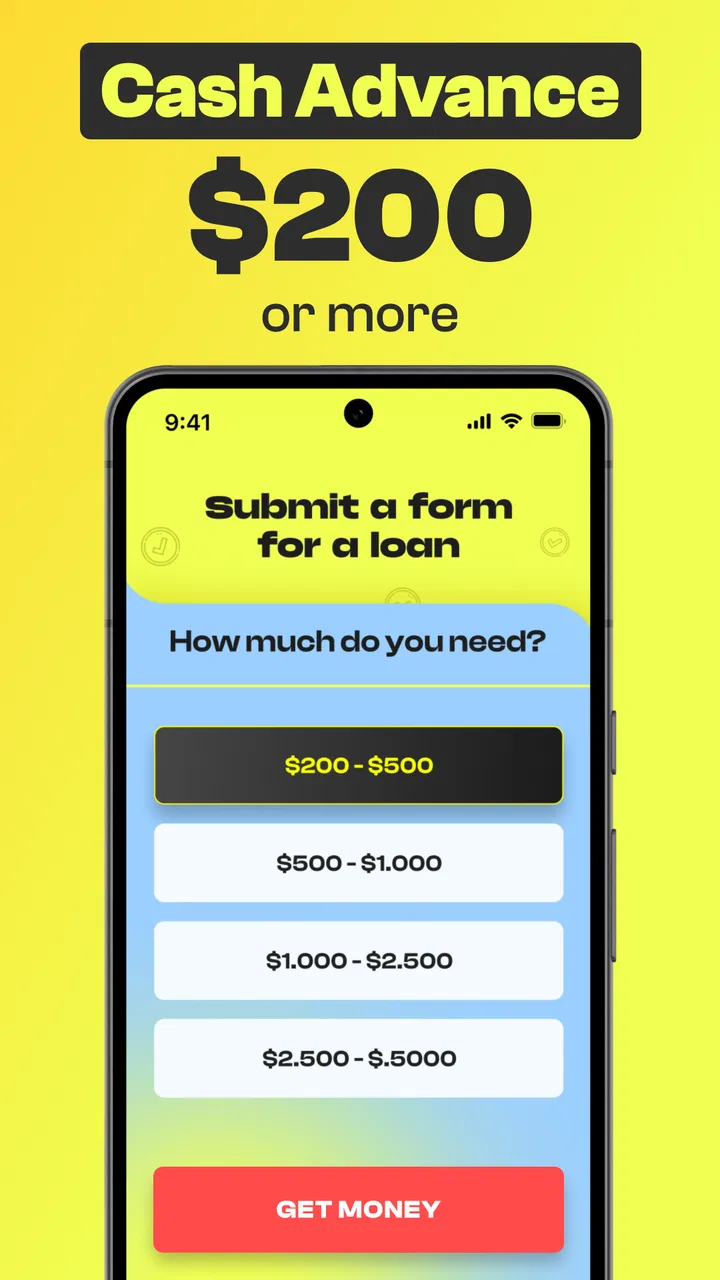
Cash Advance - No credit Check
- 4.7
- Rating
- 500.00K
- Installs
- Free
- Price

 Analysis by App-foxy
When an unexpected bill lands before payday, the appeal of Cash Advance - No credit Check is easy to understand. It is a free finance app from D.J. Advance App that presents itself as a way to look for a cash advance without relying on a traditional credit-check loan search. I approached it as a practical decision rather than a promise of easy money: does it help someone handle a short-term cash problem, and is it a sensible choice compared with other ways of covering the gap?
My answer is cautious but useful. The app is simple to find, aimed at everyday borrowers, and available to a broad audience because its content rating is Everyone. It has also built a sizeable user base, with more than half a million installs, an average rating of 4.7 from roughly eighteen thousand ratings, and about 2.3 thousand written reviews. Those figures suggest that many people find the experience worthwhile, but they should not be mistaken for a guarantee that every user will receive money or get the same terms.
How I would judge the app before using it
I’d start by separating the convenience of exploring an advance from the decision to borrow: those are not the same commitment. In this section, I’d look at what makes the app worth a closer look, then turn to whether its focused role can still be useful once the immediate urgency has passed. That distinction helps me judge lasting value without treating a quick financial fix as a routine habit.
You May Also Like

 Blood Strike: 2.5 Anniversary
Blood Strike’s Loadouts Turn Every Drop Into a Tactical Gamble
A close look at Blood Strike’s custom loadouts: how fast access to signature weapons reshapes its battle royale rhythm, rewards preparation, and narrows the gap between fights.

 Pandora - Music & Podcasts
Pandora’s Music Is Easy to Start, but Harder to Recover
Pandora’s strength is its low-effort path from a seed to a station. Its weak spot is how much confidence it asks you to place in connection, setup, and quiet recovery.

 8 Ball Pool
 Is Built on Rivalries, Rematches, and Routine
A close look at the rivalries, rematches, shared routines, and unanswered safety questions that turn a quick pool match into a persistent mobile community.

 Samsung Music
’s Quiet Strength Is Playing What You Already Own
Its reach comes less from spectacle than from dependable access to a personal library. That simplicity is both the app’s strongest retention engine and its ceiling.

 AccuWeather: Weather Radar
AccuWeather Review: A Quick, Clear Forecast for Everyday Decisions
For everyday plans, the best forecast is the one you can understand quickly. AccuWeather makes rain timing, radar, and local conditions easy to act on, with a few trade-offs.

 Hill Climb Racing
Why Hill Climb Racing Still Turns Crashes Into One More Run
A tiny car, a bumpy hill and one more upgrade: Hill Climb Racing keeps resurfacing because its simple chaos makes every near-miss feel personal.
More From Our News Desk



The first question is whether the need is genuinely short term
I would only consider this kind of app for a temporary timing problem: a utility payment due before wages arrive, a necessary trip to work, or an essential purchase that cannot reasonably wait. That distinction matters. A cash advance can bridge a narrow gap, but it does not solve a recurring budget deficit. If the same shortfall appears every pay cycle, repeatedly seeking advances can make the next month harder rather than easier.
Before opening the app, I would write down the exact amount needed and the date when repayment could realistically happen. That small step is more important than it sounds. It prevents the common mistake of requesting extra money simply because it appears available. I would also separate an urgent expense from a convenient one. An overdue electricity bill and an impulse purchase should not be treated as the same kind of emergency.
Read the offer, not just the headline
The phrase “no credit check” is attractive, but I would not interpret it as “no questions asked,” “guaranteed approval,” or “free borrowing.” A service can use other eligibility checks, account information, income details, repayment history, or its own rules. The app’s purpose is to help users look for a cash advance; the final result depends on the application process and the provider behind any offer.
My practical rule is to examine the total repayment, any applicable fee, the due date, and the consequences of missing that date before accepting anything. If those details are not clear enough to compare with the amount received, I would stop there. A quick deposit is not a good deal when its full cost is difficult to understand.
Privacy and permissions deserve attention
Finance apps handle information that can affect a person’s security and future borrowing decisions. I would therefore review every screen that requests personal or financial details and avoid rushing through consent notices. I would use a strong device passcode, keep the operating system updated, and never share a one-time verification code with another person claiming to represent the service.
This is one of the less obvious trade-offs of convenience. A fast application can save time during a stressful day, but speed also makes it easier to overlook what is being authorized. I would take screenshots or save the final terms for my own records, especially if the application redirects me to another provider. That creates a reference point if the repayment amount or date later becomes confusing.
Compatibility is straightforward, but that is not the same as suitability
The current version is 1.1.3 and it supports devices running Android 7.0 or later. That makes it accessible to people using older Android phones, which is helpful for anyone who cannot upgrade hardware just to investigate a financial option. It is still worth checking that the phone has enough free space, a stable connection, and a secure lock screen before starting an application.
The app is free to install, but installation cost and borrowing cost are completely different things. I would never use the word “free” to describe the advance itself. The sensible comparison is always between the money received and the total amount that must be returned.
Where the app is most useful
In my view, the strongest use case is a person who has predictable income arriving soon, faces one necessary expense today, and wants to explore an alternative to a bank branch or a conventional loan application. The app’s focus is narrower than a full budgeting tool, and that can be a benefit when the immediate task is simply investigating a possible advance.
For example, imagine a worker whose paycheck is due in a few days but whose car needs an essential repair to get to work. I would open the app, enter only the amount required, inspect the repayment details, and compare the result with asking the repair shop for a payment arrangement or using an existing emergency fund. If the advance creates a repayment burden that threatens rent or groceries, I would reject it even if the application process were quick.
Small habits that make the process safer
One useful habit is to use a “minimum necessary” request. Instead of estimating generously, I would ask what the bill actually requires and leave a small margin only when the final cost is known. This reduces the amount that has to be repaid and makes the decision easier to evaluate.
A second is to compare the advance with a delay rather than comparing it only with another loan. Some providers may allow a bill extension, a payment plan, or a changed due date. Those options can involve less financial pressure than borrowing, even if they feel less immediate. The app is best treated as one place to investigate, not as the automatic first answer.
A third is to set a repayment reminder outside the app. I would add the due date to my calendar as soon as I accept an offer and keep the required amount separate from everyday spending. This is especially important because a short-term advance can disappear into a bank balance and become easy to forget.
What the user experience gets right
The main strength is focus. The app is built around a specific financial moment rather than trying to be a complete banking dashboard, investment platform, or expense tracker. For someone searching for a cash advance, that direct purpose can feel more manageable than navigating unrelated financial features.
Its broad availability is another practical advantage. Being free to download and rated for Everyone lowers the barrier to exploring it, while the Android compatibility reaching back to version 7.0 means the audience is not limited to people with the newest phones. I also see the strong average rating and the volume of user feedback as signs that the app has been useful to many people, although I would still read recent comments with a critical eye rather than relying on the score alone.
The developer, D.J. Advance App, has positioned the product around access to short-term cash rather than traditional credit language. That may appeal to users who have been turned away by conventional lenders or who want to investigate options without starting at a bank. The important distinction is that an easier first step does not remove the need to check affordability.
Why the “no credit check” angle needs careful interpretation
For users with limited or damaged credit histories, the app may feel more approachable than a conventional loan comparison. However, I would not assume that the absence of a traditional credit check means the application is risk-free or that approval is likely. A provider can still decide that an applicant does not qualify, and a successful application can still carry conditions that are unsuitable.
This is where the app’s wording can influence expectations. “No credit check” describes an important part of the search appeal, but it should not replace a full review of the offer. I would treat it as a reason to investigate, never as a reason to accept quickly.
Where another option may fit better
If I needed a larger amount, a longer repayment period, or a predictable fixed schedule, I would compare a conventional personal loan, a credit-union product, or a bank option instead. Those routes may involve more paperwork or stricter eligibility, but they can be easier to evaluate when the borrowing need is not a few days or a single pay cycle.
If the problem is a bill rather than a lack of general cash, I would contact the biller first. A payment arrangement may protect the household budget better than taking an advance. For a very small emergency, an existing savings cushion or help from a trusted person may also be less expensive, provided the arrangement is clear and does not create personal pressure.
If the underlying issue is repeated overspending, this app is not the right tool. A budgeting app, a debt-advice service, or a conversation with a qualified financial counselor would address the cause rather than temporarily covering the symptom. I would skip a cash-advance search entirely if repayment would require another advance.
What switching between options really costs
Moving from this app to a bank or credit union usually costs time: another application, more documentation, and possibly a longer wait. Moving from a cash advance to a bill extension may cost convenience or require a phone call, but it could reduce the amount owed. The cheapest-looking path is not always the one with the lowest total cost.
There is also a record-keeping cost. Each application can create new emails, account notices, repayment dates, and customer-service conversations. I would keep those details together in one folder and avoid submitting multiple applications in a panic. Comparing a few clearly understood choices is safer than accepting the first offer simply because it appears quickly.
Switching away from the app after starting an application should also be deliberate. I would close unfinished sessions, review any confirmation messages, and check whether I had agreed to be contacted. The point is not to distrust every finance app; it is to keep control over the financial trail created during a stressful decision.
Questions I would answer before accepting an advance
I would first ask, “How much will leave my account in total?” The answer should be expressed as a clear repayment amount, not just a vague reference to a fee or service charge. Next, I would ask, “When exactly is repayment due?” A date that conflicts with rent, food, or another essential bill is a warning sign.
I would also ask, “What happens if my income arrives late?” The consequences of a missed or failed repayment matter just as much as the normal schedule. Finally, I would ask whether I am viewing an actual offer or simply beginning a search that may lead to another provider. That distinction helps prevent confusion about who sets the terms and who should answer support questions.
The app’s free price makes it reasonable to explore, but I would not enter sensitive details casually just because there is no download charge. I would use the same caution I would use with any financial application: verify the destination, read the terms, and stop when the cost or repayment process is unclear.
My recommendation for different kinds of users
I would recommend trying Cash Advance - No credit Check to someone facing a genuine, short-lived cash gap who understands that the app is a starting point for an advance search, not a promise of approval or a substitute for budgeting. Its focused purpose, free access, broad Android compatibility, and strong user response make it a reasonable option to investigate.
I would recommend skipping it for anyone who needs long-term borrowing, is already juggling several repayments, cannot identify a reliable repayment date, or is hoping that an advance will solve an ongoing income problem. In those situations, a structured loan comparison, bill negotiation, savings plan, or professional debt guidance is likely to be more appropriate.
My final view is positive with firm limits. The app can be useful when timing is the problem and the solution is carefully sized, fully understood, and repaid on schedule. Its biggest weakness is not necessarily the interface; it is the risk that a convenient search encourages borrowing without enough attention to the total obligation. Use it as a comparison and decision tool, not as permission to borrow more than you can comfortably repay.
For that reason, I would install it only after defining the exact need, checking alternatives that do not involve borrowing, and deciding in advance what repayment amount is affordable. If the figures work and the terms are clear, it may help bridge a narrow gap. If they do not, the best decision is to close the app and choose a slower but safer route.
FAQs for Cash Advance - No credit Check
01What is Cash Advance - No Credit Check and how does it work?
Cash Advance - No Credit Check is a mobile app designed to offer short-term financial assistance without the need for a credit check. Users can apply for a small loan directly through the app, providing basic personal and banking information. Once approved, funds are typically disbursed quickly, often within the same day.
02Are there any fees or interest rates associated with using this app?
Yes, while the app doesn’t require a credit check, it does charge fees and interest on the borrowed amount. These costs vary based on the size of the loan and the repayment terms. It’s crucial to review all fees and interest rates disclosed in the app before proceeding with the loan application.
03How secure is my personal information on the Cash Advance app?
The app employs encryption and other security measures to protect your personal and financial information. However, it’s advisable to carefully read their privacy policy to understand how your data is handled and shared. Users should also ensure they download the app from reputable sources like Google Play or the Apple App Store.
04What are the eligibility requirements for obtaining a cash advance through the app?
To be eligible for a cash advance, you generally need to be at least 18 years old, have a valid bank account, and provide proof of a steady income. The app may also require additional documentation, which can include identification and employment details. Meeting these criteria doesn’t guarantee approval, as each application is subject to review.
05Can I use the Cash Advance app if I have a poor credit score?
Yes, one of the main features of the Cash Advance - No Credit Check app is that it doesn’t consider your credit score when evaluating your loan application. This can be particularly beneficial for individuals with poor or no credit history, as it focuses more on your current financial situation and ability to repay the loan.
Pros
- Instant access to funds anytime.
- No credit check required.
- Simple and user-friendly interface.
- Quick approval process.
- No hidden fees or charges.
Cons
- Limited to small loan amounts.
- High interest rates for late payments.
- Requires access to banking info.
- Not available in all regions.
- Repayment deadlines can be strict.

Cash Advance - No credit Check
Gallery